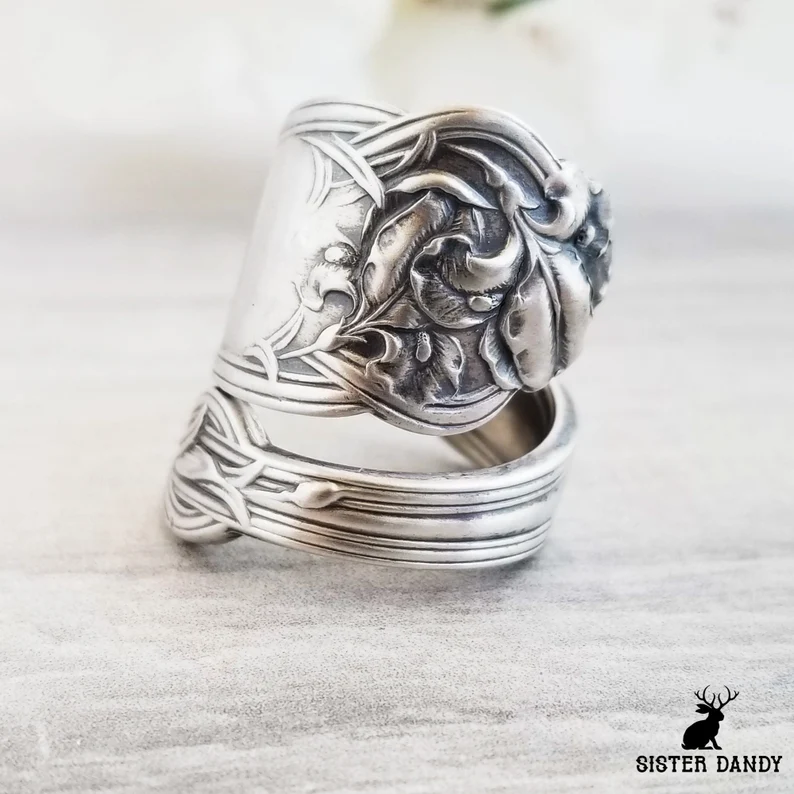

Alvin silver tells a story of invention, beauty, and American craftsmanship. Today, collectors recognize the company for its sterling silver flatware, sculptural spoon handles, silver decorated glass, and highly detailed patterns. Many of these antique spoons now find a second life as wearable art.
The Beginning of Alvin
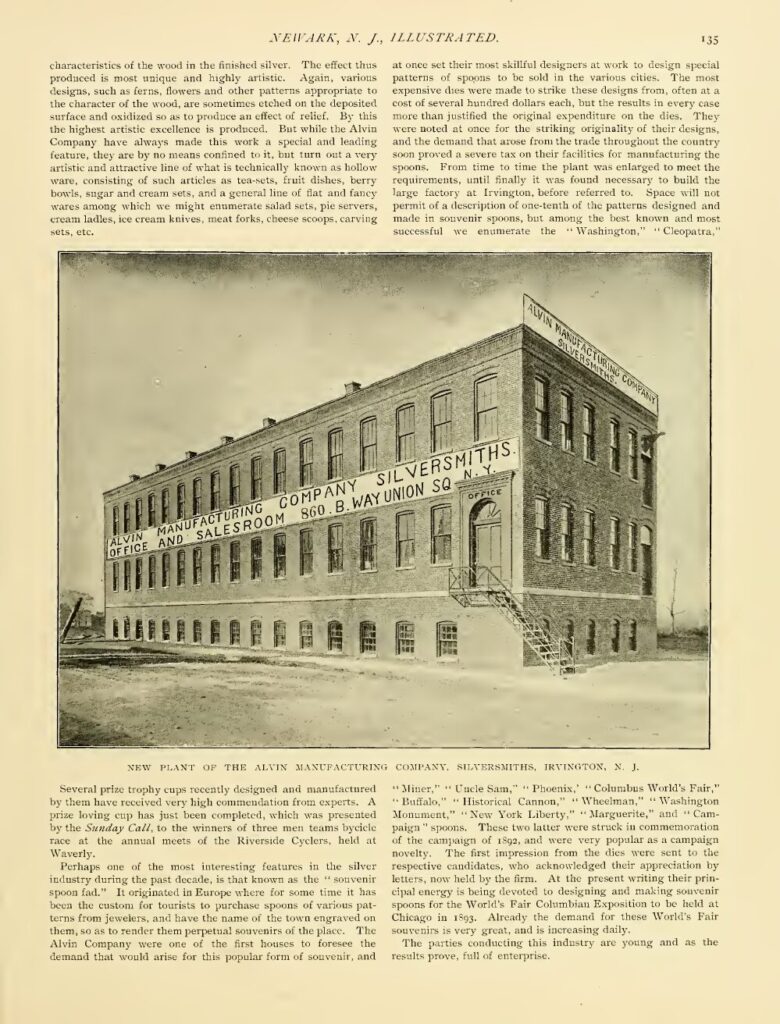
The business began during the 1880s and was formally incorporated as the Alvin Manufacturing Company on August 17, 1887. Its original purpose was the manufacture of sterling silverware and silver novelties. The company first operated in Newark, New Jersey, before expanding near Irvington.
Alvin became known for combining traditional silversmithing with modern manufacturing. Its workshops included departments for engraving, die cutting, polishing, rolling silver, and electro deposit work.
One of its early specialties was silver deposited onto glass. This process created raised silver flowers, vines, scrolls, and geometric decoration across transparent crystal. The Metropolitan Museum of Art holds an Alvin glass and silver vase dated between 1890 and 1905, confirming the company’s place within American decorative arts history. (925-1000)
Alvin later moved its manufacturing operations to Sag Harbor, New York, where it became associated with the Joseph Fahys organization. The business adopted the name Alvin Silver Company in 1919. Gorham acquired Alvin’s assets, patterns, and dies in 1928 and transferred production to its Rhode Island facilities. (Silver Collection)
Alvin Manufacturing Company Sterling Silver Spoons
Alvin’s sterling silver spoons are among its most personal surviving objects. The company produced teaspoons, tablespoons, dessert spoons, soup spoons, sugar spoons, berry spoons, preserve spoons, salt spoons, chocolate spoons, ladles, and specialized serving utensils.
Sterling silver contains at least 925 parts pure silver per thousand, which is why American sterling is often marked STERLING or 925. The remaining metal gives the silver enough strength for practical use.
Alvin spoons can be recognized through a combination of details. The maker’s mark, the word STERLING, the pattern, the utensil form, and any monogram or presentation inscription all help identify a piece.
A spoon marked Alvin Mfg. Co. may belong to the company’s earlier period, although the mark alone does not prove that it was made in the nineteenth century. A spoon marked Alvin Silver Co. generally dates from 1919 or later.
The introduction date of a pattern should also be treated as the earliest possible date rather than the exact manufacturing date of every surviving spoon. A pattern introduced in 1903, for example, may have remained available for years afterward.
Art Within the Handle
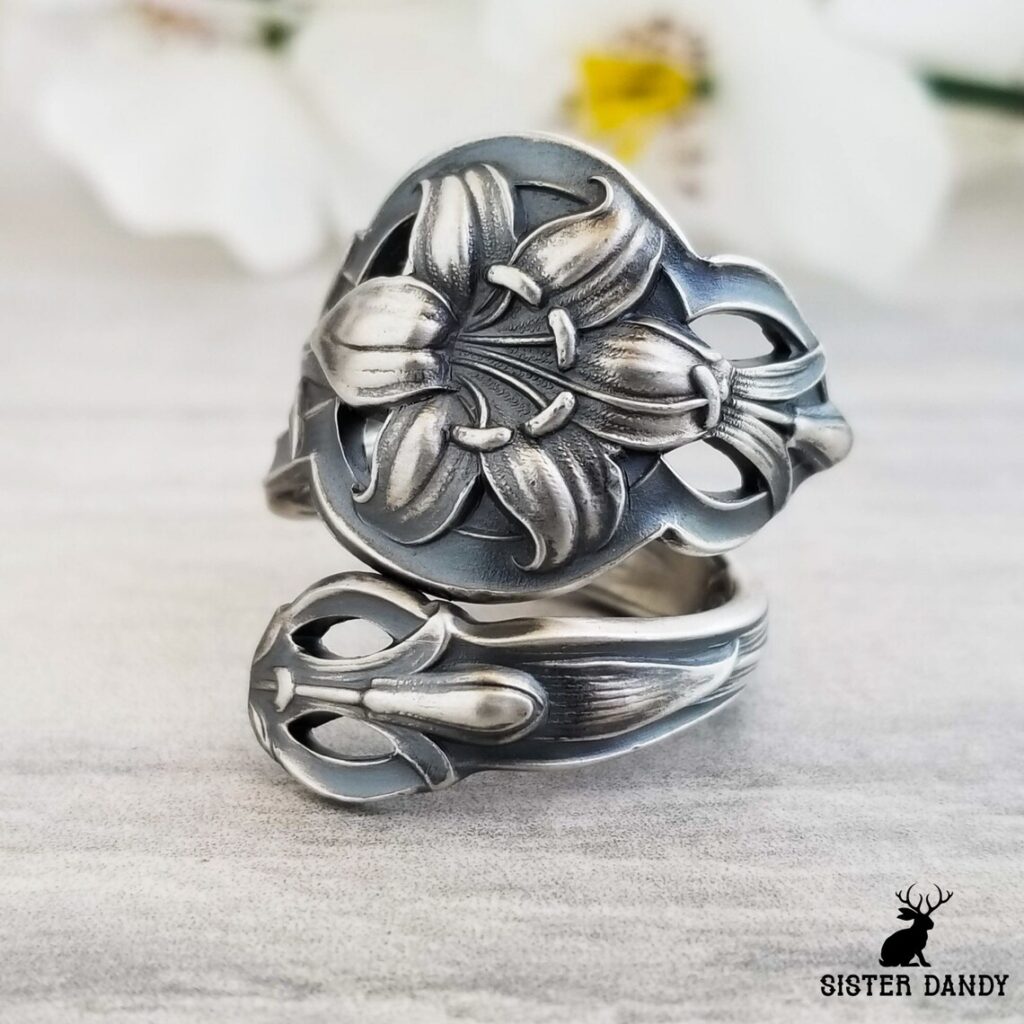
Alvin created patterns ranging from simple classical forms to elaborate figural and floral compositions.
Some handles feature flowers, leaves, shells, scrolls, faces, shields, or flowing architectural decoration. Others carry old family monograms, wedding dates, initials, or presentation messages.
These details make antique Alvin spoons especially suitable for spoon rings. When the handle is carefully curved around the finger, decoration that once lay flat beside a dinner plate becomes a piece of miniature sculpture.
Wear can also be part of the story. A softened edge, polished surface, or faint monogram may show that a spoon spent decades serving a family rather than resting untouched in a cabinet.
The Raphael Pattern
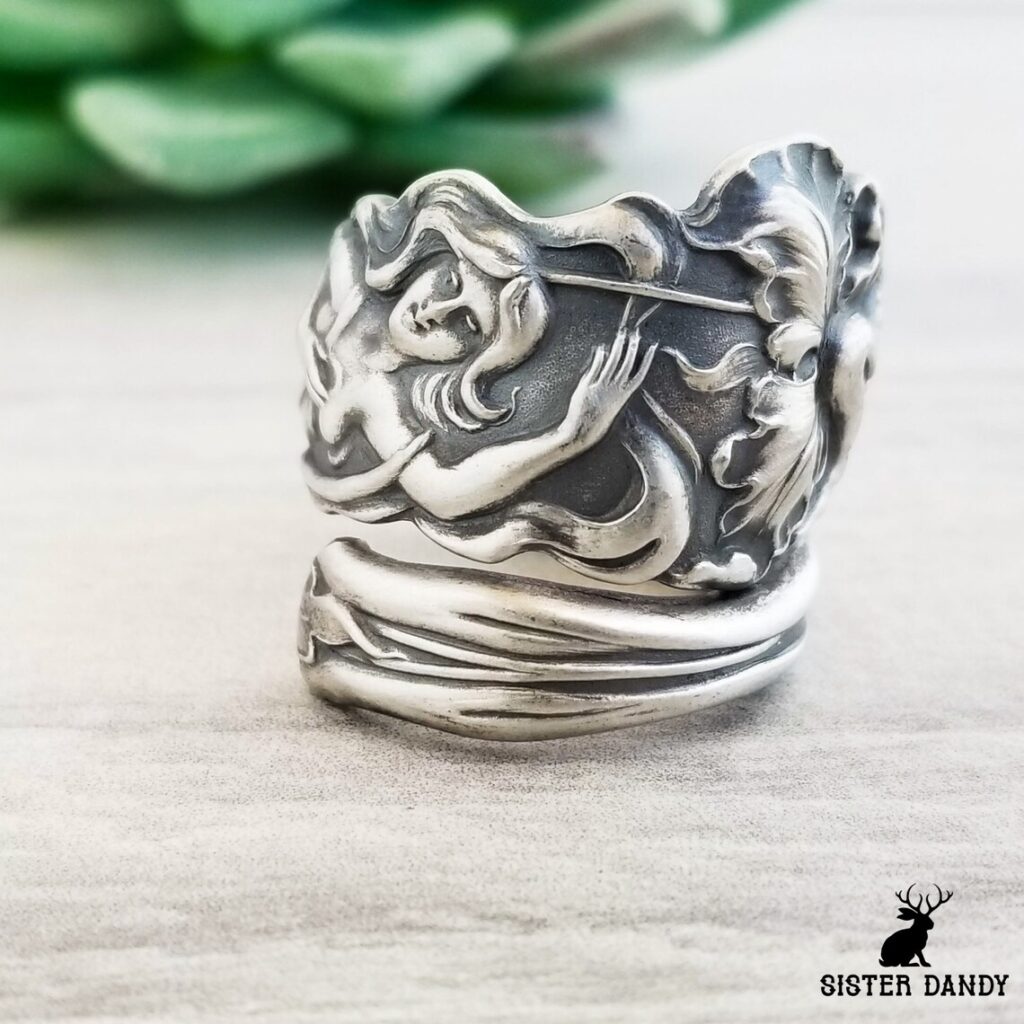
The Raphael pattern was introduced around 1902 while the business was still known as the Alvin Manufacturing Company. Pattern references attribute the design to Frederick Habensack and identify it as a multi motif pattern, meaning that the decoration can vary among different utensils. (Copper Lamp)
Raphael is one of Alvin’s most recognizable figural designs. Its handles feature a graceful female figure surrounded by flowing foliage and flowers. The design reflects the natural curves and feminine forms associated with the Art Nouveau period.
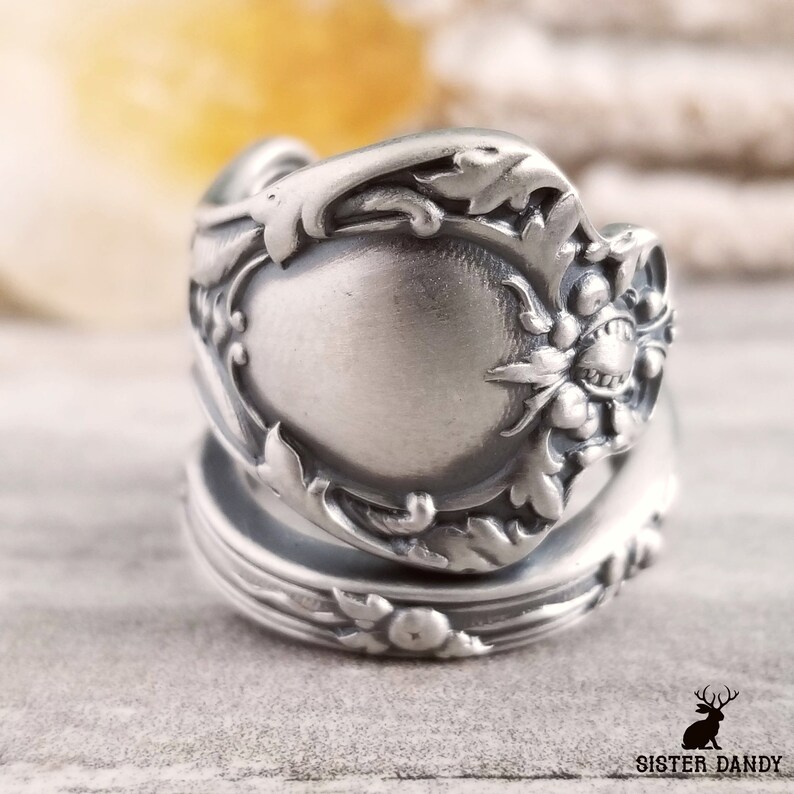
On a spoon ring, Raphael becomes especially expressive. The figure and surrounding flowers wrap around the finger, allowing the raised design to be viewed from several angles. Each utensil form may reveal a slightly different arrangement of the figure, leaves, and floral details.
The Nuremburg Pattern
Another important Alvin design is the Nuremburg pattern, introduced in 1903. Pattern references attribute Nuremburg to designer Percy B. Ball. The pattern is consistently cataloged under Alvin’s spelling, Nuremburg. (Sterling Flatware Fashions)
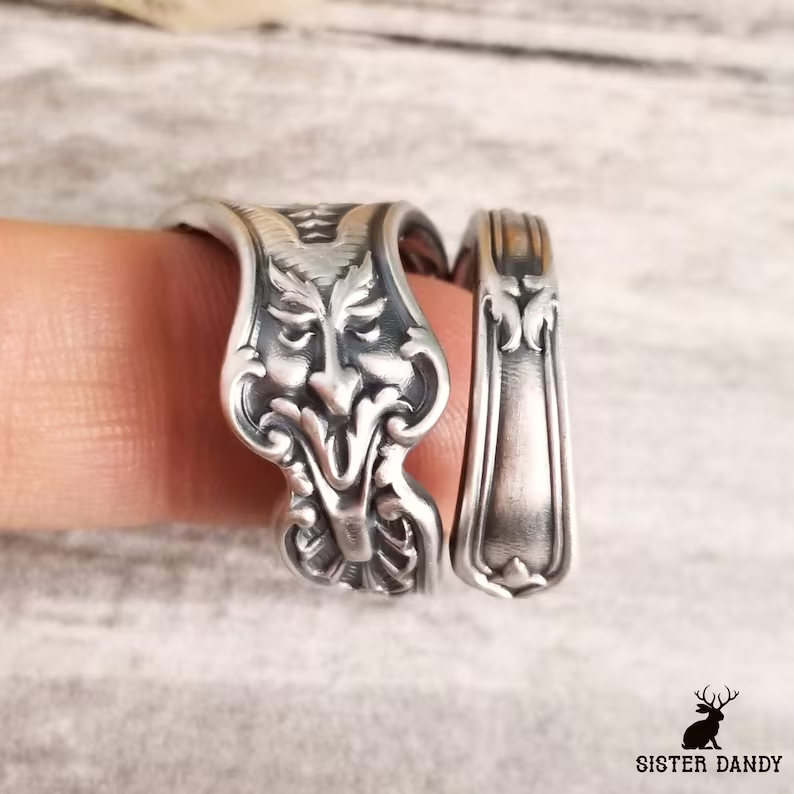
Nuremburg has a dramatic historic character. Its handle includes a raised Greenman face near the terminal, surrounded by scrolling relief ornament. The narrow stem is decorated with additional rococo and foliate details, giving the pattern a rich, sculptural appearance. The face can be easy to overlook in photographs or on a heavily tarnished spoon. Once the silver is examined closely, it becomes one of the pattern’s most memorable features.
Nuremburg was made in an unusually broad selection of table and serving forms. Documented examples include place spoons, jelly spoons, salt spoons, chocolate spoons, gravy ladles, cheese scoops, salad servers, serving forks, knives, and other specialized utensils.
For spoon rings, Nuremburg offers strong visual possibilities. The raised face can become the central focal point of the ring, while the scrolling decoration follows the curve of the band. Depending on where the handle is shaped, the finished ring may emphasize the face, the decorative stem, or the original monogram area.
Souvenir Spoons and American Memory
Alvin also participated in America’s souvenir spoon collecting craze. The company produced spoons decorated with monuments, historical figures, patriotic symbols, cities, and major public events.
These spoons were more than table utensils. They were small records of travel, civic pride, family experience, and national history. Their detailed handles allowed people to carry a miniature remembrance home from a journey or celebration.
Chosen With Care, Made to Be Cherished
At Sister Dandy, every antique Alvin spoon is carefully selected for its sterling silver, pattern, condition, and unique character before being placed in the hands of our team to transform into a one of a kind spoon ring. Each piece is thoughtfully shaped to preserve the beauty of its original design while giving it a new purpose as a wearable keepsake. In this way, the craftsmanship of the Alvin Manufacturing Company lives on in handmade rings created to be worn, loved, passed down, and enjoyed for generations to come.